Brian C. Reyes

Uncategorized

December 16, 2024

Designing Between the Lines, Revisited

“This design is so bad! Why did they change it?!” — a friend

Recently a company slack channel exploded with a visceral emotional reaction to Amazon’s redesign of the AWS Portal. They were upset with the changes Amazon made to the AWS portal.

Time to revisit an old concept.

A little over a decade ago I wrote a commentary on how lines affect design. That article describes how our brains are wired to see edges and lines. This can be beneficial when we are looking for objects (or say, an approaching car) but can create overwhelm when a visual design uses too many lines.

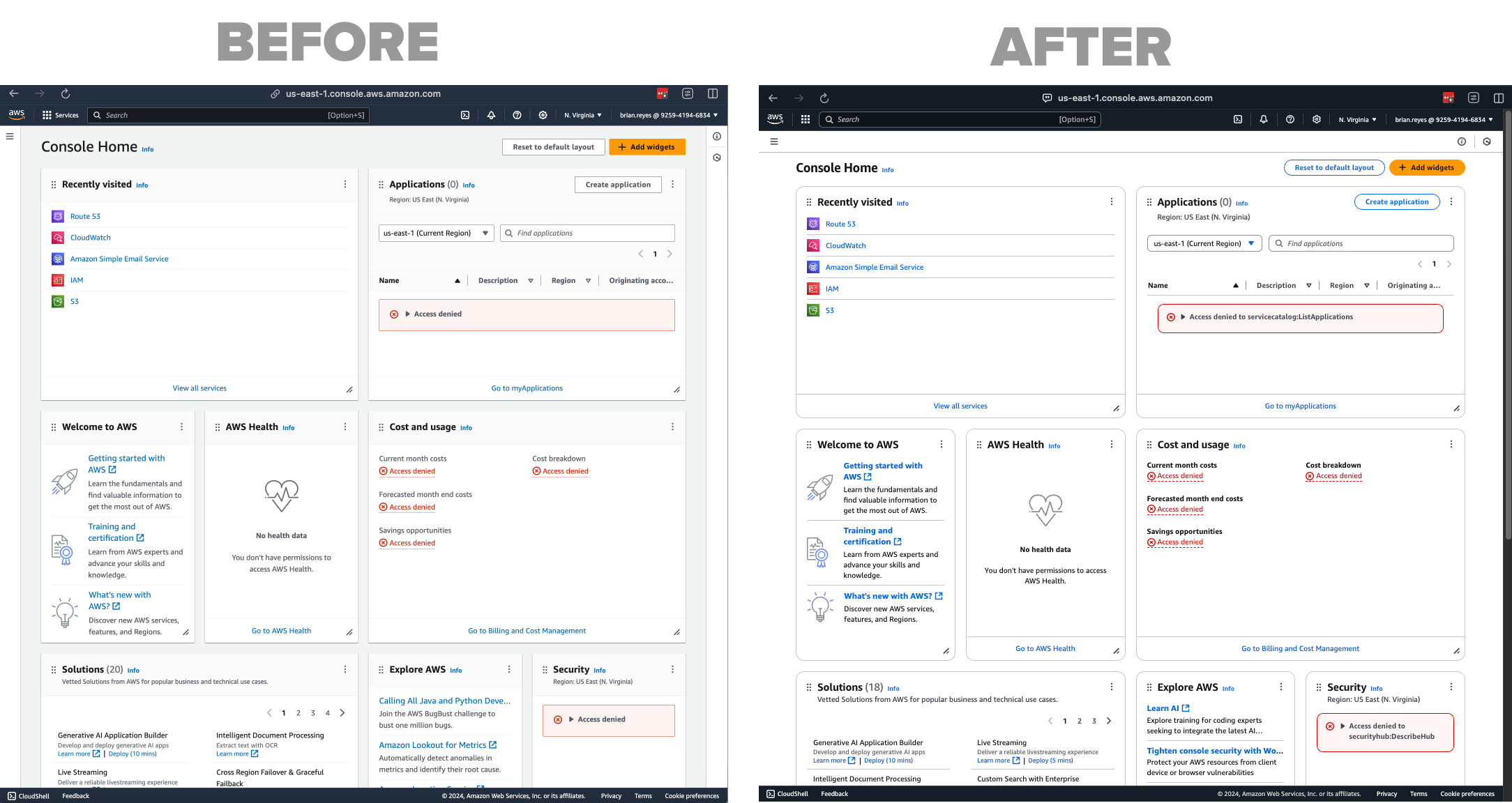
Here is the before and after of the AWS portal:

So what do we see between these two designs?

In the older design, Amazon used a visual design that made it easier to find the cards on the dashboard. The edges were understated, and our brains are able to quickly detect what are objects and what is in the background. In terms of Gestalt principles, the rules of human visual perception, the white cards are the figures and the gray background is the ground (Wikipedia: Figure–ground).

Save brain cycles…deemphasize edges!

In the updated AWS design, this figure–ground relationship is diminished. Suddenly we are experiencing a version of flat design that is akin to Apple’s early attempts at flat design in iOS 7 (2013) which were rectified in iOS 8 (2014) — see iOS 7 v iOS 8.

Lines draw your eye, and in the case of AWS the goal should be to draw your eye to the content, not the edges. Emphasized lines can increase the amount of work our brains must do to understand what we are looking at, as it activates the edge detection in our visual cortex. Save brain cycles, deemphasize edges!

Gestalt Principles are fundamental, and yet their incorporation can still prove challenging. I suspect we will see this theme return as the great wheel of design continues to turn, but the laws of visual perception will remain the same.

Here’s to hoping more people can incorporate fundamental principles into their designs.


“Those who fail to learn from history are doomed to repeat it.” — WINSTON CHURCHILL

A portrait of Winston Churchill by James Guthrie

Winston Churchill, by James Guthrie


December 1, 2024

The Thermostat vs the Thermometer

As Dr. Martin Luther King Jr. sat in a Birmingham jail, he invented one of my favorite metaphors of all time. He said to be a thermostat, not a thermometer.

What a simple, powerful idea.

When we complain, we are a reflection of our environment. In those moments, we are the thermometer. Life feels like it’s happening *to* us.

When we take action, we are a thermostat. We actively radiate our energy into the environment, and in doing so we become the writer in our own story. We realize that, while we cannot control what happens to us, we control how we respond. We can be the warmth we want to see in the world.

“Between stimulus and response, there is a space. In that space is our power to choose our response. In our response lies our growth and our freedom.”
—Viktor Frankl

Stay warm my friends.

by Farideh Pouradam

November 16, 2024

The double edged sword

Every strength, no matter how celebrated, can carry within it the seed of its own vulnerability. Strengths are not absolutes; they are double-edged, and can offer both gifts and burdens to those who wield them.

You may be fast—sometimes at the sacrifice of quality.
You may be independent, and that independence can create barriers, leaving others feeling unheard or excluded.
You can be passionate and inspiring, and that same intensity can overwhelm others.
Your resilience may give you the grit to endure, but can tether you to toxicity, long after you should have let go.
Your creativity may let you jump endlessly from one idea to the next, but it may scatter your focus, leaving much undone.

Fire warms, and burns. Water soothes, and drowns. No strength exists without the shadow of its own weakness.

Next time someone seems to be struggling with what appears to be a character flaw, think for a moment on that person’s strengths and see if there is a connection.

A fish cannot be faulted for its inability to climb a tree. And neither should we, in our strengths and weaknesses, be judged apart from the whole of who we are.

October 15, 2024

Embrace the difficulty

Early in Sir Michael Caine’s acting career, during an acting lesson, he was blocked from entering the stage due to a misplaced chair. When he expressed concern to the director, the advice he received was to “use the difficulty” — to turn the obstacle into part of the performance. For a drama, the suggestion was to move the chair with force or pick it up and smash it; for a comedy, he could trip over it.

“Use the difficulty” became a guiding principle in his life, inspiring him to find ways to leverage challenges rather than letting them hinder progress.

Facing adversity can reveal new opportunities or perspectives. By reframing obstacles one can avoid defeat and gain control over the situation.

Roman emperor and philosopher king Marcus Aurelius said, “What stands in the way becomes the way.”

It is the obstacles and difficulties that set the stage of our life; how we respond is what defines us.

It is not our good luck. It is not our bad luck. It is not our circumstances.

How we *respond* is how we write our life story.

We often think difficulty is simply bad.

But difficulty is essential.

Struggle is necessary.

Almost every good book, movie, story has difficulty. And there is a hero that strives to overcome it.

You are the hero in your own story.

And you cannot be a hero without difficulty, because with it, there is no story.

Embrace the difficulty; on the other side of difficulty lies a story worth telling.

Chair, by Nicholas Holman


June 19, 2017

The Diversity Nacho

Imagine a plate of the ultimate nachos. What’s on it? Perhaps perfectly toasted corn chips, a winning combination of cheeses, sour cream, guacamole, your favorite protein, diced onions, and some salsa with just the right amount of heat. Now imagine you go in for a bite…and it’s all cheese. “Not bad,” you think, but you know it could be better. Next bite you manage to get some sour cream on, and it’s an improvement. Third attempt you balance beans, sour cream, cheese, and salsa…this is encouraging. And then it happens. The perfect bite of nachos. Everything and anything you desire perfectly balanced on a single chip. You have found it. This is the diversity nacho–a blend of everything, all working together towards the common goal of attaining nacho nirvana. But nachos are not the only thing that can benefit from diversity.

Nachos

Photo: Bo Ure

Walk into any forest and you will see a tremendous amount of diversity. This is nature’s way of preventing a catastrophic loss of all life and building in strength and resilience: vulnerabilities such as parasites, mold, or physical threat such as fire or flood can wipe out a number of species, but likely not all. Ecologists will tell you that the more diverse and complex an ecosystem is the more resistant it is to a wide array of challenges and threats. By contrast, many of the crops we grow on farms represents a monoculture—all the same plant. These crops are constantly at risk: if a single threat appears, the entire crop can be wiped out. As a result pesticides are sprayed to protect the monoculture. Residue from pesticides can cause other problems if they are not removed before consumption.

“The more diverse and complex an ecosystem is the more resistant it is to a wide array of challenges and threats.” Photo: Brown (1985)

In the IT world a configuration of systems all running the same OS and same applications (and therefore same vulnerabilities) can present an ideal target for a hacker. A single weakness found on one system can then be leveraged to give access to the entire system. Diversity of systems, OSes, patches, applications, configurations, etc. can sometimes prevent attacks from spreading but the level of diversity of man-made computer systems pales in comparison to the nearly endless forms of diversity found in nature. However, sometimes simply having a different OS is enough to thwart an attack or render a threat inconsequential. As time goes on, diversity and intelligence is coded and passed down to systems in the form of patches and updates: a technological analogy of the evolution seen in nature.

Humans, as a part of nature, can benefit from diversity in many ways. Skilled professionals that have the ability to work across many disciplines, who know how to code, who are proficient in powerful tools and platforms, and are able to keep up with ever changing technologies are more likely to succeed than those that are unable or willing to adapt. There is a word often attributed to tech workers that only understand a single technology and do not adapt to the ever changing landscape: unemployed. In nature, the word is extinct.

As people look for more powerful, scalable, and adaptable technologies, we also look for ways to harness the diversity of teams and team members. Teams that leverage the power of diversity are more adaptable and have a wider pool of knowledge and experience to pull from. Diversity can come in the form of work experience, language (whether spoken, written or coded), culture, gender, skills, age, ethnicity, sexual orientation, personal hobbies and interests, and more. A team that includes diverse members such as a member with military background, someone who ran a non-profit, an IT professional from a foreign country, an architect, a former teacher, and a lawyer will often out perform a team in which all members grew up in the same town, received degrees from the same school, and interned at the same companies.

There is a word often attributed to tech workers that only understand A single technology and do not adapt to the ever changing landscape: unemployed.

McKinsey & Company has published reports that show evidence that gender diverse companies are 15% more likely to succeed financially than gender imbalanced companies, ethnically diverse companies are 35% more likely to succeed.

IDIC stands for “Infinite Diversity in Infinite Combinations.” A commitment to the power and strength in the concept of IDIC can be shown by a company’s hiring, inclusion and empowerment in an increasing the amount of diversities. It also means seeking to understand what constitutes true diversity. For us this might mean starting with more obvious inequalities such as gender and ethnicity, and using them as opportunities to start working towards diversity. It also means seeking to understand what constitutes true diversity. We aim to go deeper and seek to understand people at an individual level to understand how the nuances of their lives shape them to form their own diversities of thought and perspectives. It means we need to include those that don’t always speak up and get everyone’s voices heard on projects and in meetings. Diversity without inclusion is like having the seeds available but not planting them or letting them take root. Finally, to go a step beyond diversity and inclusion we seek to empower those diversities so their influences are embedded and woven into our organizations at all levels.

Seek to understand people at an individual level to understand how the nuances of their lives shape them to form their own diversities of thought.

By harnessing the power of diversity we seek to strengthen our companies and organizations and create a place where diversity of mind helps us achieve higher levels of profitability and success and create a world where we seek and value differences rather than fear them. It is us all together working together towards a common goal that we achieve our best.

February 13, 2017

Half man, half…we’re not sure yet

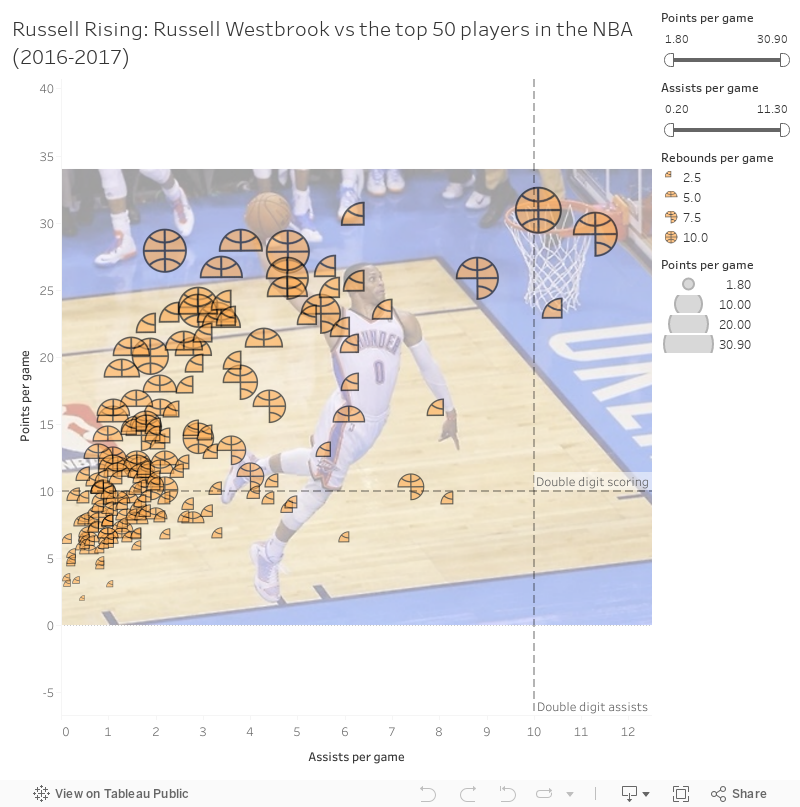
A triple-double is a rare feat in basketball in which a player achieves double digits in three main stats categories (e.g., points, assists, rebounds, steals, or blocks). Russell Westbrook is achieving an incredible and unique feat in NBA basketball history: AVERAGING a triple double (that’s a triple double every game) while also leading the league in scoring.

It has been reported that Russell Westbrook is in fact part cyborg.

The triple-double machine

The triple-double machine
(Photo: Bleacher Report)

A few elite players separate from the rest of the pack when analyzing scoring, rebounding, and assists:

  • Russell Westbrook
  • James Harden
  • Lebron James
  • John Wall

But all fail to reach triple-double status in one way or another: John Wall’s 4.4 rebounds per game, James Harden’s 8.2 rebounds per game, and King James’s 7.8 rebounds and 8.8 assists, while still strong stats in and of themselves, miss the double-digit mark and drop them out of triple-double territory. Only Westbrook remains. He stands alone as the sole possessor of triple-double statistics that, if maintained through the end of the season, would place him as the first player to achieve a triple-double for an entire season in the history of the NBA.

March 27, 2014

Splunking the Keg

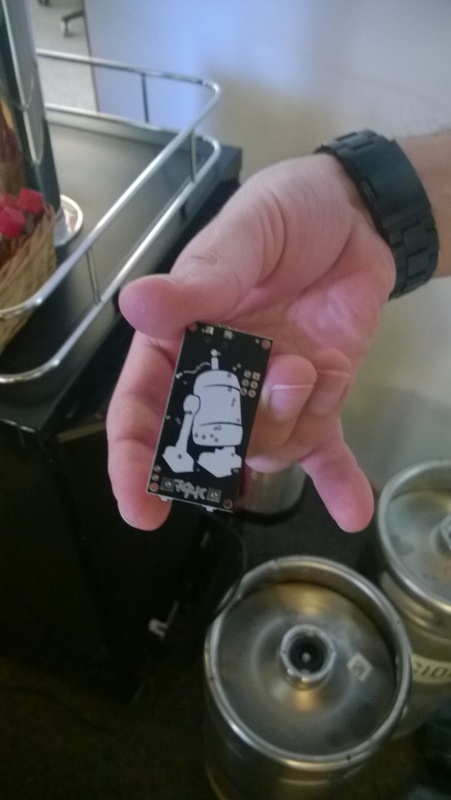
At Splunk we like to "SPLUNK ALL THE THINGS!" and this includes our keg (Splunkers are quite fond of their beer). We recently installed Kegbot, a flowmeter + specialized circuitboard that reads how much beer you are pouring out of your keg and outputs the data for analysis into Splunk. That's right, we can now track our drinking habits with pretty charts and graphs (maybe set an alert when the keg is running low!) and conduct statistical analyses. Our San Francisco office has already been doing this for a while...we just installed ours today #keepingup.


Meet Kegbot

Meet the Kegbot

Ketbot chills on the back of the Kegorator #seewhatididthere

Ketbot chills on the back of the Kegorator #seewhatididthere

The flowmeter connects via Ethernet to Kegbot

The flowmeter connects via Ethernet to Kegbot

The flowmeter is connected between the keg and the tap.

The flowmeter is connected between the keg and the tap.

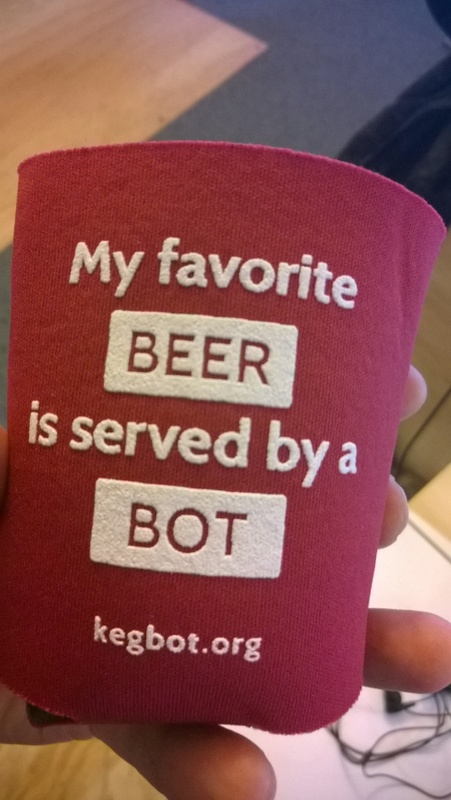
The official Kegbot beer koozie.

The official Kegbot beer koozie.

"These ARE the beers you are looking for."

"These ARE the beers you are looking for."

November 17, 2013

What is Splunk?

At Splunk we believe in the power and value of exploring and understanding  data. We happen to make amazing software that lets you do exactly that.

Splunk has helped slice data for Domino’s, tracked airplane traffic at JFK airport, and is even used to analyze people’s heartbeats. Splunk is used around the world by data geeks to  explore and find the many secrets hidden within the data.

Ok…but what is Splunk?

It’s software.  You download it and install it on a laptop, a server, or a thousand servers. You can access it through a browser.

People use it to search massive amounts of data in seconds.

How does Splunk help?

There’s an enormous amount of live data from your computer systems and smart devices that people have to sift and wade through every day. Doing that is time consuming, stressful, and a huge pain in the ass.

Splunk lets the data geeks search, report, and alert on any kind of data. On the fly you can organize information into nice tidy data sets, and from there you can calculate statistics and email people pretty charts.

Bullshit.

Well you’re not going to be emailing your boss a pie chart of “causes of lost revenue” in 15 minutes.  But that’s seriously possible in a couple of hours.  Out of the box, Splunk will parse data and extract out a lot of meaning, and if it doesn’t get everything, you can even teach it how to extract the juicy numbers and information from  your data. The data geeks love this.

You can download Splunk for free and try it for yourself (warning: data geek level 15 or higher is recommended).

Editor’s note: this post is adapted from David Carasso’s Dive Into Splunk. David, thanks for being awesome.

November 10, 2013

Kind of a Big Deal

Big Data is kind of a big deal. It is everywhere, and it is growing fast. Extrapolating from a study by IDC:

From this massive amount of data, roughly a third is valuable when analyzed (the remainder is composed largely of cat videos and food pictures); however IDC estimates only about 0.5% is analyzed today. Despite this, we see companies already benefiting from taking Big Data seriously. In fact, data from Oracle suggests that top performing companies are 3 times more likely to be using Big Data analytics.

Big Data is serious business, and I am excited to be a part of it.

Older Posts